|
|









|
|
This blog has moved
This blog is now located at http://mediablog.andrewolson.com/. You will be automatically redirected in 30 seconds, or you may click here. For feed subscribers, please update your feed subscriptions to http://mediablog.andrewolson.com/feeds/posts/default.
posted by AndyO @ 11:01 AM
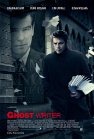
The Ghost Writer
AndyO review: * * * 1/2 Metacritic: 77/100 (Generally favorable reviews) They don't make them like this anymore. Roman Polanski's simmering, claustrophobic thriller evokes some of the best 70s films (like Polanski's own Chinatown) in a modern framework. In these days of explosions and IMAX 3-D films, it's refreshing to see a master filmmaker at work. Here's how the film opens: A ferry boat docks. Car engines start. Cars begin to drive off the boat, but then we see there's one car that's not moving, a BMW SUV. The owner hasn't returned to his car. Cars drive around the empty BMW. Soon a tow truck arrives and tows the car off the boat. In this first scene, Polanski conjures his story without a word of dialogue. We learn that the car was driven by a writer who was ghost writing the biography of an ex-Prime Minister of England (Pierce Brosnan). Then a new ghost writer (Ewan McGregor) is hired and shipped off to Martha's Vineyard by the publisher to work with the Prime Minister. After the Ghost arrives (the writer is never referred to by name), the Prime Minister is accused of war crimes, and everything starts to unravel. McGregor's ghost writer is trying to find out what happened to the first -- and, at the same time, is trying to find out who the Prime Minister really is. This film is full of so many great performances by McGregor and Brosnon, but also Kim Cattrall as Amelia Bly, the Prime Minister's assistant, and Olivia Williams as Ruth Lang, the Prime Minister's wife. But what I really came away with was respect for the way Polanski let the scenes breathe. Nothing is rushed. Watch the sequence where the Ghost takes the BMW SUV for a ride and the GPS becomes a plot device. The only criticism have is the ending, which I won't spoil. I wish that Polanski would have thought this through with the same level of detail that he did with the rest of the film. Let's just say that it has the same effect as a character waking up at the end and saying, "Oh, it was all a dream." Labels: film
posted by AndyO @ 7:51 PM
Green Zone - Theater
AndyO review: * * * Metacritic: 61/100 (Generally favorable reviews) Green Zone takes us deep inside Iraq with Chief Warrant Officer Roy Miller (Matt Damon), who's searching for Weapons of Mass Destruction. When Miller starts to ask why they're not finding any WMDs -- even though the intelligence is "solid" -- he enters an unfamiliar world of scheming politicians, CIA operatives, reporters, Iraqi prisoners, and Iraqi military officers. Green Zone is a solid thriller that doesn't let up until the final scene. Labels: film
posted by AndyO @ 11:58 PM
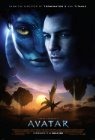
Avatar - Theater (3-D)
AndyO's review: * * * * Metacritic: 84/100 (universal acclaim) Avatar brings us into a world that we've never seen before. Many films have gotten close, but it was only after seeing Avatar in 3-D that I felt like I'd actually visited an alien world. Much of this was achieved by the subtle use of 3-D, and in the hands of director James Cameron, 3-D becomes truly immersive. The story of Avatar centers on a paraplegic Marine, Jake Sully (Sam Worthington), who goes to Pandora as an "avatar driver." He's taking over for his twin brother who died, and because Jake shares his DNA he's able to use the same avatar body. The avatars are grown in a tank, made up of both alien and human DNA. The avatar drivers are able to animate the alien body and operate in the Pandoran atmosphere, which is poisonous to humans. And with his avatar, Jake is able to walk again. Jake and the other humans are there because Pandora contains a rare element that humans need to power Earth; but the native Na'vi don't like the intruders and are willing to defend their planet. Because of this, soldiers are there to protect the contractors from the Na'vi and all the other dangers. Jake Sully's first mission with his avatar is to protect scientists, led by Dr. Grace Augustine (Sigourney Weaver), who are collecting samples on Pandora. When Jake Sully gets left behind and attacked by creatures, he's saved by a Na'vi female named Neytiri. Instead of killing Jake, the Na'vi accept Jake into the tribe to teach him about their ways. In many ways, Pandora is the star of this film. Cameron and his team of designers have created a world where everything is different than what we know. For example, when Jake first walks through the jungle with Neytiri, wherever he steps glows with bioluminescence. Jellyfish-like creatures float in the air. Another creature is a combination of a hammerhead shark and a rhinoceros. There are wonders on this world, like floating mountains and plants that contain the knowledge and memories of the Na'vi. In fact, the universe of Pandora is so detailed that one scientist has written a review of the Science of Avatar, giving Cameron and his crew high marks. The story of Avatar is in many ways a retelling of the countless genocides that have occurred throughout history. But the one I kept thinking back to was the American Government's war with the Native Americans. We'd like to think that our future leaders wouldn't annihilate an indigenous people on another planet to get to something they want -- but, sadly, I think they would. Many people have written that Avatar's story is a blatant rip-off of several other films, including Dances with Wolves or even the animated Disney film Pocahontas. This Thompson on Hollywood blog explores the many influences of Avatar, asking the question is Avatar derivative? Sure. But, as Thompson points out, most screenplays are derivative. A college writing teacher of mine, Charles Johnson, used to tell us if you're able to bring one or two original ideas into a story, then you're doing really well. Avatar borrows from many other films and books -- but it's the combination of the stories that adds up to something original. George Lucas accomplished the same thing with Star Wars. Like Star Wars, Avatar's special effects are groundbreaking. This is the first time that digital technology has reached a level of realism with human motion and performance. There have been other films that have attempted this with characters, from Jar-Jar from Star Wars Episode I to Gollum from Lord of the Rings to the The Polar Express. Avatar is the first to get all the elements right and combine this with 3-D technology. ----------------------- Now that Avatar has been out for about a month, it's clear that the film has become a phenomenon around the world. Not only has it become the number one movie of 2009 in the United States, it's slowly closing in on the top all-time domestic box office gross. What's even more impressive is it's second only to Titanic in worldwide box office grosses. Many people wanted James Cameron to fail with Avatar. I'm not sure why, but much of it seems to be centered on Titanic and all the Oscars it won -- and all the money it made. Cameron's one of those rare directors who has the tenacity and perseverance to make films on the scale of Titanic and Avatar. Say what you want about him, but the guy knows how to deliver epic films that are accepted worldwide. (I heard that most Iraqis think that Titanic is the greatest film ever made -- and the American forces have used this to find common ground.) After I saw Avatar with my 9-year-old son, he had said something to the effect of, "I'm sad that it's over." I've seen in him the same reaction I had to Star Wars when I was a 10-year-old. I suspect for many children, Avatar is going to be their Star Wars. Further reading: Roger Ebert: Cameron is recrowned King of the World Avatar: A Confidential Report on the Biological and Social History of Pandora (James Cameron's Avatar) -- If you want to learn more about the world of Avatar, this is a really interesting book. I got it for my son for Christmas, and he's been taking it to school to show his friends. 60 minutes story on James Cameron (video) James Cameron's "scriptment" for Avatar -- This is the script treatment that Cameron wrote before the screenplay for Avatar. It begins like this: Welcome to JOSH SULLY'S world. It is a century from now, and the population of our tired planet has tripled. Finally, drowning in its own toxic waste, starvation and poverty, the population has topped out at a nice even 20 billion. The Earth is dying, covered with a gray mold of human civilization. Even the moon is spiderwebbed with city lights on its dark side. Overpopulation, over- development, nuclear terrorism, environmental warfare tactics, radiation leakage from power plants and waste dumps, toxic waste, air pollution, deforestation, pollution and overfishing of the oceans, global warming, ozone depletion, loss of biodiversity through extinction... all of these have combined to make the once green and beautiful planet a terminal cess-pool. Labels: film
posted by AndyO @ 12:27 PM
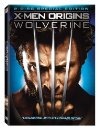
X-men Origins: Wolverine - Blu-ray
AndyO review: * * * Metacritic: 43/100 I'm a sucker for the X-men movies. Compared to The Fantastic Four, X-men films seem like they should be Oscar winners. Recently, I watched the first three X-men films with my son Cameron, and thought they held up pretty well. While I expected Wolverine to be sub-par, based on the reviews I saw, I actually found it pretty interesting. Especially interesting was the beginning, which showed that Wolverine already had a special gift (as did his brother) before he got the metal claws. He could heal spontaneously; he was immortal. We watch scenes of both brothers fighting in practically every war since they existed. We also see what drove Wolverine to go from mere immortal to a certified killing machine. Definitely worth seeing if you like comic book films or Hugh Jackman. Labels: film
posted by AndyO @ 10:48 AM
Astro Boy - Theater
AndyO review: * * Metacritic: 53/100 This film looked great from the previews. Both my boys were excited to see it. But it ended up being a little too serious for kids (after all, Astro Boy is a robot replacement for a scientists' child who dies at the beginning).
posted by AndyO @ 10:32 AM
Whip it - Theater
AndyO review: * * * 1/2 Metacritic: 67/100 Whip it is Drew Barrymore's directorial debut, a coming-of-age story about a girl in a small Texas town who wants to join a rollerderby team. First, Drew Barrymore's direction is excellent. She was obviously taking notes from Spielberg and all the other directors she's worked with over the years. Second, Ellen Page is a force of nature. Her performance in Juno was no fluke (all you have to do is watch Hard Candy, which was done before Juno, to see that). There are very few actors who can draw you into a character the way Page does. Third, I didn't know anything about rollerderby until I saw this film. I always thought it was about women trying to kill each other while skating around in circles. Well, I guess there are rules -- and there is a way to win. Do yourself a favor and go see this film. Today. Labels: film
posted by AndyO @ 6:01 PM
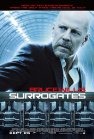
Surrogates - Theater
AndyO review: * * 1/2 Metacritic: 45/100 Surrogates could have been a great Science Fiction film. It combines many of the themes and ideas seen in countless other Sci-Fi films (notably The Matrix) to form something unique and entertaining. But a short running time and formulaic plot hold back the film. Surrogates shows us a world where humans experience their daily lives through robot avatars. The robots go to work and play and the humans stay home in their pajamas, controlling them in the real world. Crime and disease plummet to all-time lows. Everyone looks great and can jump around like a superhero when they need to. Thomas Greer (Bruce Willis) is a detective in this world. Instead of the weathered, shaved head version of Willis we're used to seeing, we see a smooth-faced version with a full head of hair. Greer and his partner, Jennifer Peters (Rhada Mitchell), are sent to investigate the destruction of two surrogates outside a night club. When they discover one of the surrogate operators is the son of the inventor of surrogate technology, Dr. Lionel Cantor (James Cromwell), everyone knows something is up. But then they find out Cantor's son is dead, as is the operator of the other surrogate -- something that shouldn't happen with the fail-safe switches built into the machines. But it wasn't this plot that I was interested in. I wanted to know more about these stories, on edges of this plot: - Greer and his wife Maggie (Rosamund Pike) don't see each other at home, except through their surrogates. When Greer wants to take a vacation without their avatars, Maggie objects. She doesn't want her husband to see that she's not the perfect version of herself that she wants to be.
- The operator of the female, blonde surrogate that was murdered along with Cantor's son was a man. As the usual detective story crept forward, I kept thinking about that man and realized surrogate technology would enable people to be who they want to be. (This is already a reality with the Internet where you don't really know who you're talking to.)
- Parents are encouraged to get surrogates for their children, so they're always safe at home.
- Part of society has rejected surrogate technology and lives in reservations where surrogates are forbidden.
A great version of this film would have found the right story to explore the philosophical and moral questions in more detail. Which is why I think you'll see a Surrogates TV series. One thing that I found extremely odd was the casting of James Cromwell. He practically plays the same character as he did in I, Robot and L.A. Confidential. Labels: film
posted by AndyO @ 5:46 PM
Cloudy with a Chance of Meatballs - Theater
posted by AndyO @ 11:51 AM
The Informant! - Theater
AndyO review: * * * 1/2 Metacritic: 66/100 Steven Soderbergh and Matt Damon team up again in this true-life tale of Mark Whitacre -- an executive who turns on his employer, Archer Daniels Midland. While this is being marketed as a comedy, The Informant! is not as laugh-out-loud funny as those advertisements would like you to think. And while it might have been different than what I expected, I enjoyed it from start to finish. Labels: film
posted by AndyO @ 11:29 AM
| | |